
A Strategic Look at the Latest MED Regulatory Shifts and How They May Apply Elsewhere
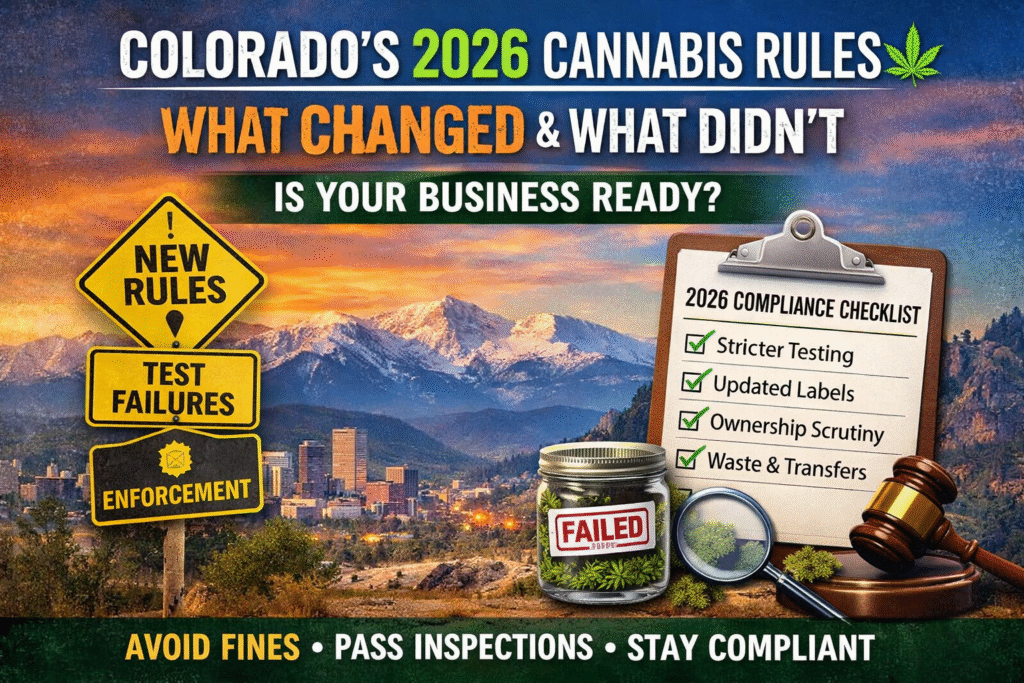
What Changed in Colorado’s 2026 Cannabis Rules & What Didn’t. As the new year begins, Colorado’s cannabis industry faces a defining challenges, adapting to the most extensive regulatory updates since adult-use legalization. Changes that continue to resonate across markets still seeking to solve batching considerations, testing, and quality concerns.
On January 5, 2026, the Colorado Marijuana Enforcement Division (MED) enacted sweeping rule changes that affect nearly every aspect of licensed operations — from testing and waste to packaging, labeling, and hospitality.
For many operators, this update has felt like just another burden in an already strained market. But for those looking to stabilize, grow, or position for acquisition in a post-280E world, these rule changes present a rare opportunity:
To reset, reorganize, and lead with compliance.
Why 2026 Is a Pivotal Year for Operators
This is not just another compliance cycle.
Between oversupply, shrinking margins, consumer trust concerns, inconsistent quality, and the potential end of 280E taxation due to federal rescheduling momentum, the market is recalibrating. Investors are watching. Enforcement is increasing. And the gap between proactive and reactive operators is widening.
Many of the 2026 rule changes reflect a clear theme:
Professionalize or perish.
Key Rule Changes You Should Be Navigating (Right Now)
1. Testing Protocols & Enforcement Oversight
Operators must now ensure:
- Proper batch definitions and documentation
- Valid sample chains of custody
- Timely and traceable product movement post-sampling
This is in direct response to the growing concerns around dirty product, label mismatches, and inadequate recall preparedness. The MED has already flagged several violations in Q1 — and it’s only February.
2. Packaging & Labeling Revisions
The universal THC symbol and product information now require more specific placement, font sizing, and visibility standards. These aren’t optional — they’re enforceable. And they represent a renewed emphasis on consumer safety and consistency.
3. Edibles, Shelf-Stability, and HACCP Alignment
Regulators are now pushing edibles operators toward more food-grade safety procedures, including:
- Shelf-stability documentation
- Clear allergen declarations
- Dosing protocols and process validation
If you’re not already building toward a HACCP plan, now is the time. Especially if you’re seeking to process validate — now known as reduced testing allowance (RTA).
What’s Driving These Changes?
In our analysis, these updates reflect two realities:
- Regulators are tightening enforcement in response to repeated compliance failures, particularly in testing and labeling.
- There is a growing effort to align cannabis manufacturing and operations with traditional food, pharmaceutical, and consumer safety models — especially as federal rescheduling draws nearer.
The message is clear:
Operators must elevate their systems, documentation, and internal accountability.
Strategic Takeaways: How to Respond
For Colorado licensees, this moment calls for investment in internal systems — not as a regulatory obligation, but as a value-creating asset.
- Conducting a high-risk audit focused on top enforcement categories and violations
- Updating SOPs to reflect current testing, labeling, operating, and handling protocols
- Implementing CAPA, Recall, and HACCP systems for all facilities
- Re-training staff on rule changes, violation categories, and documentation practices
- Developing internal compliance calendars for QA review, testing, maintenance, and renewal timelines
Compliance Is the New Due Diligence
With the possibility of 280E being lifted and federally-allowable investment rules loosening, compliance is no longer just about surviving — it’s about increasing your valuation.
Every SOP, training log, audit report, and CAPA plan is now a proof point for control — and that control builds trust with investors, regulators, consumers, and strategic partners.
Looking Ahead
This year, some cannabis businesses will go under. Others will double down on compliance, professionalize their operations, and position themselves to thrive.
Which one will you be?